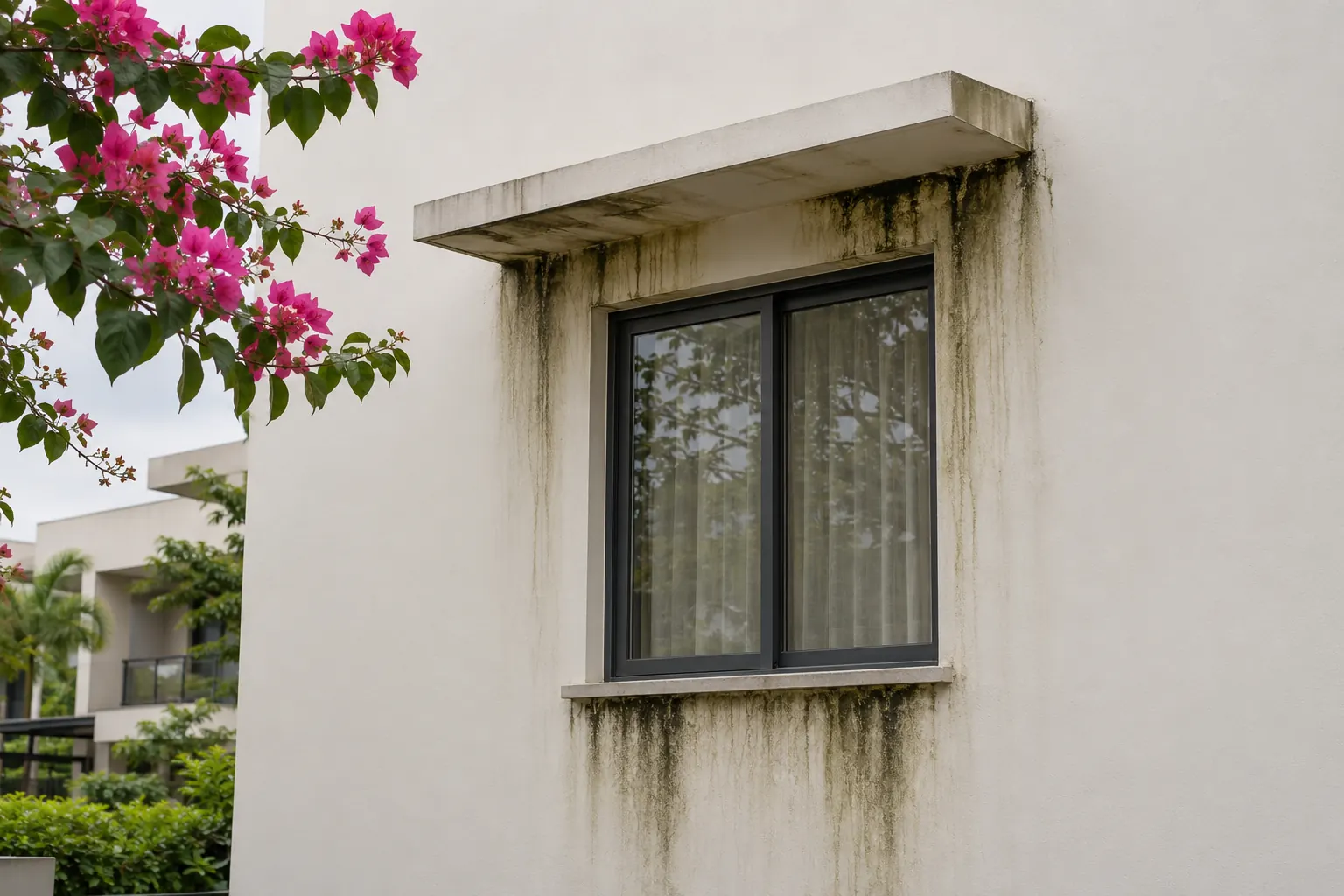
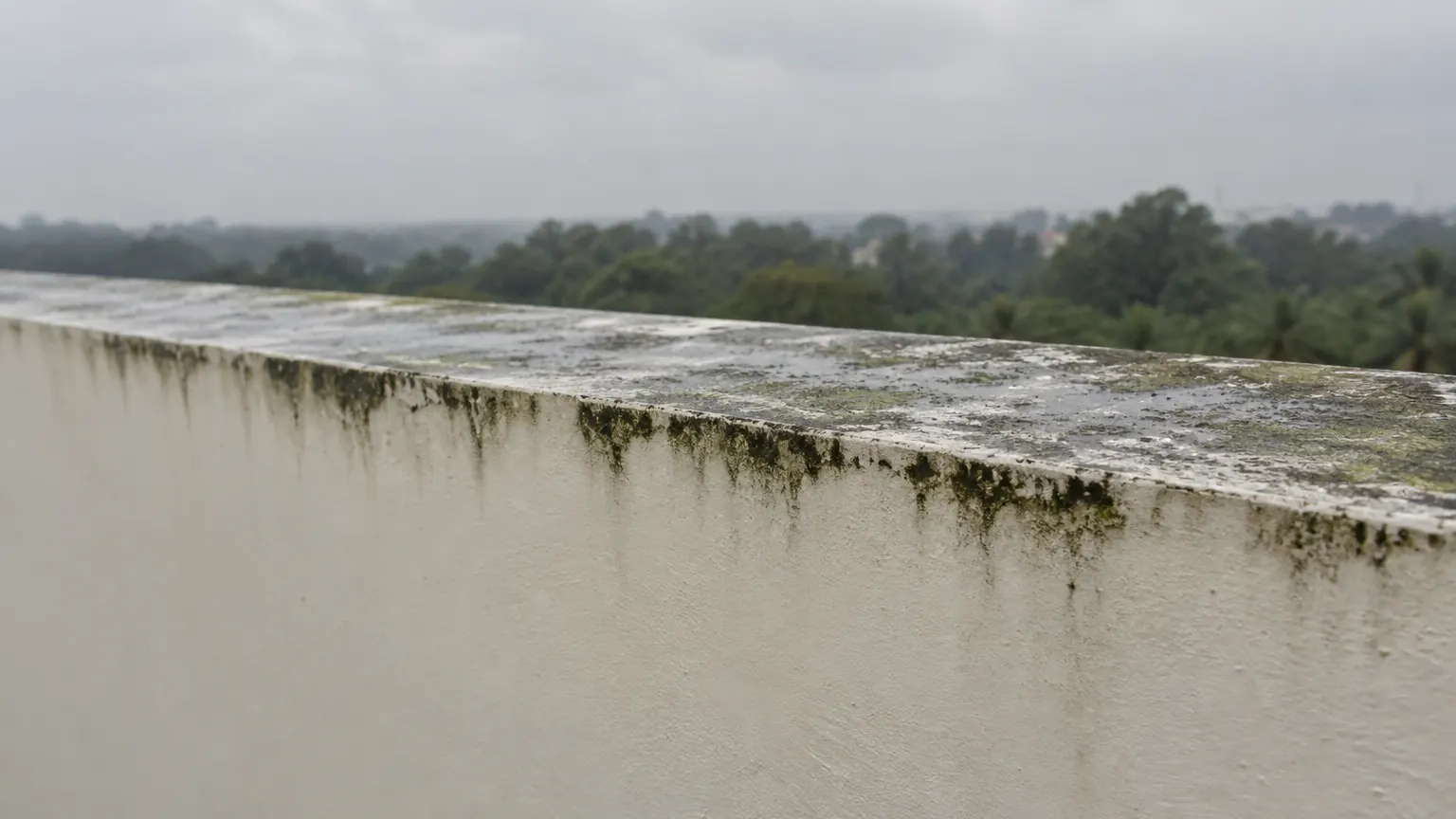
Most buildings in India show it within a few monsoons. Dark streaks run down from window sills, patches of black spread under chajjas, and the parapet turns grey-green along its top edge. People call it black fungus. It is usually a mix of algae and mould living on the wall, and once it settles in, it keeps coming back.
What the black marks actually are
The streaks are living growth. Algae and mould spores travel in the air and land on every wall. Most of them never take hold. The ones that land somewhere damp, shaded and slightly dirty find everything they need: water, shelter from strong sun, and a film of dust and pollution to feed on.
As they grow, they darken. On a light facade the result looks like soot or staining, and many owners assume it is dirt. Washing removes some of it, but the roots of the growth stay in the pores of the plaster or concrete, and the marks return after the next rains.
Why some walls get it and others don't
Walk around any building after the monsoon and the pattern is easy to read. The growth follows water.
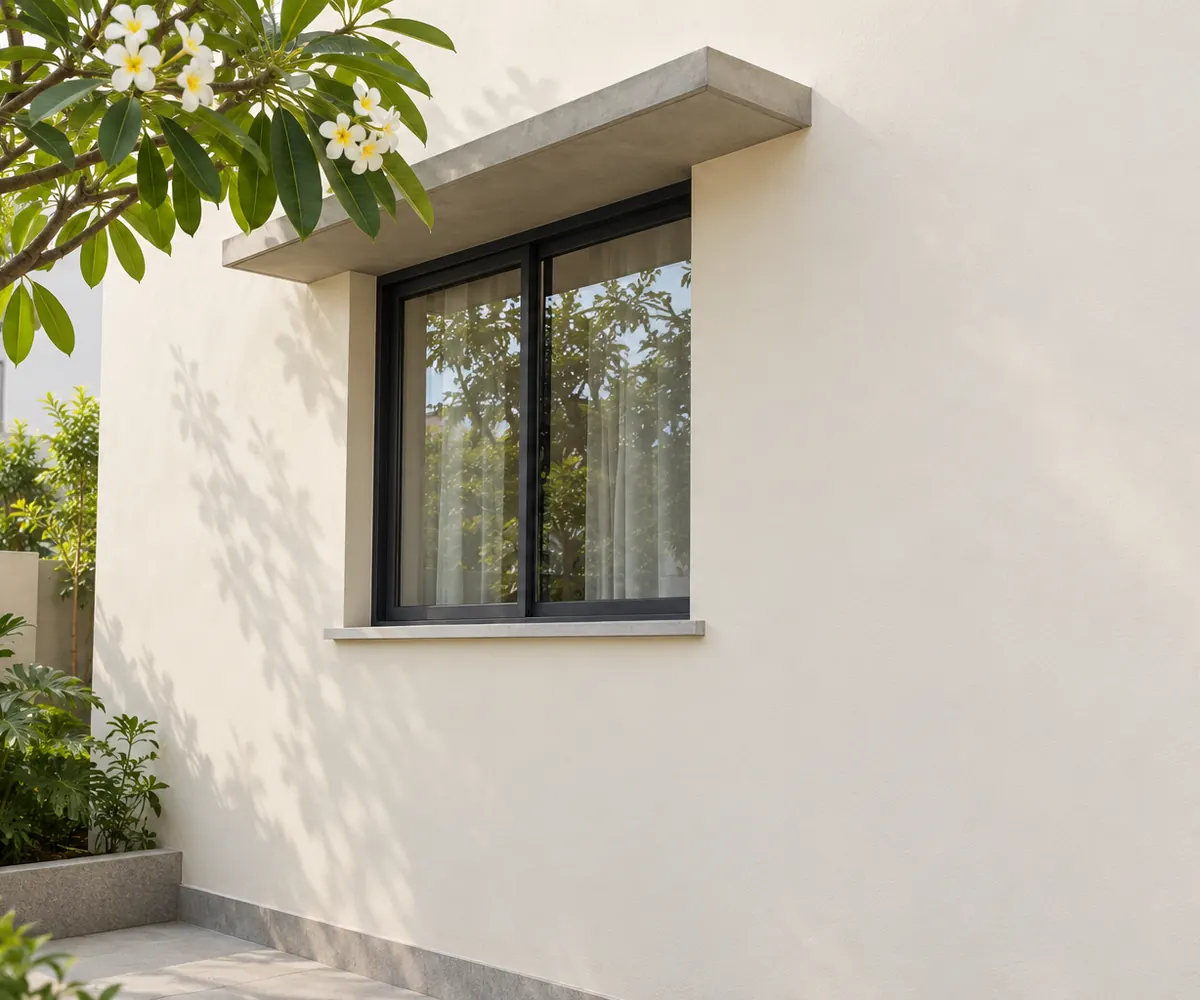
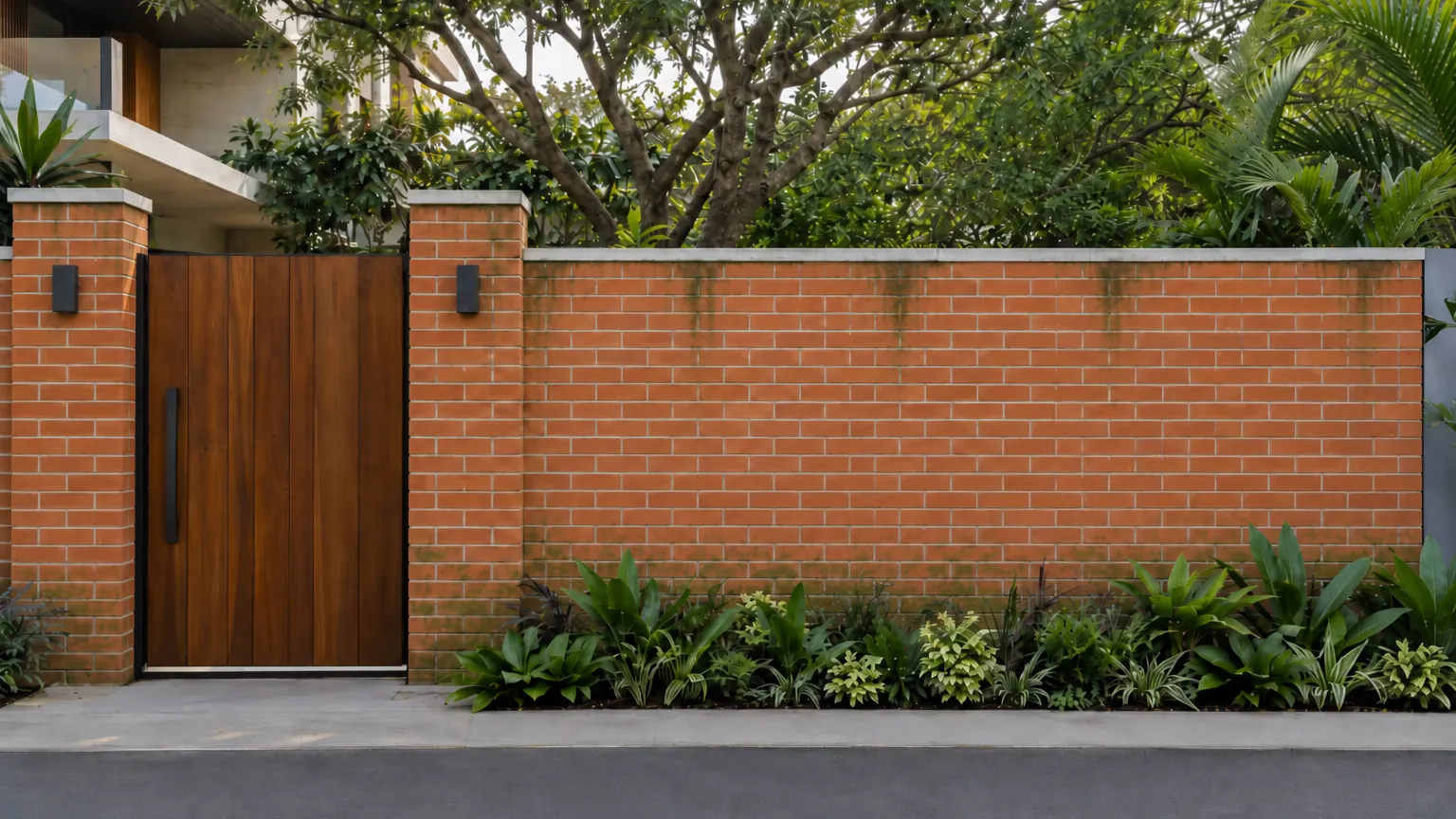
It gathers below sills and chajja edges where rainwater runs off and drips down the wall. It spreads along parapets and ledges that hold water after a shower. It shows up on walls that face away from the sun, behind trees and in narrow gaps between buildings, where surfaces stay damp for days. Porous surfaces make it worse, because they hold moisture longer.
Air quality plays a part too. In cities, walls collect a fine layer of soot and oily pollution, and that layer gives algae and mould something to grow on.
Why repainting doesn't keep it away
The usual fix is to clean the wall and repaint, often with an anti-fungal paint. It works for a while. Most anti-fungal paints rely on additives that slowly wash out of the film with every monsoon. Once they are gone, the wall is back where it started, with fresh dirt on it and spores landing every day.
That is why many buildings end up on a cleaning or repainting cycle every few years. On a tall building, each round means scaffolding or rope access, labour, and a facade that looks tired for part of every year.
What helps
Some of the fix is design. Drip edges under sills and chajjas move runoff away from the wall face. Sloped tops on parapets stop water sitting on them. Good drainage at the base keeps splash-back off the lower wall. These details cost little at the drawing stage and save a lot later.
The other part is the surface itself. A wall that stays clean gives growth nothing to feed on.
How a self-cleaning coating works
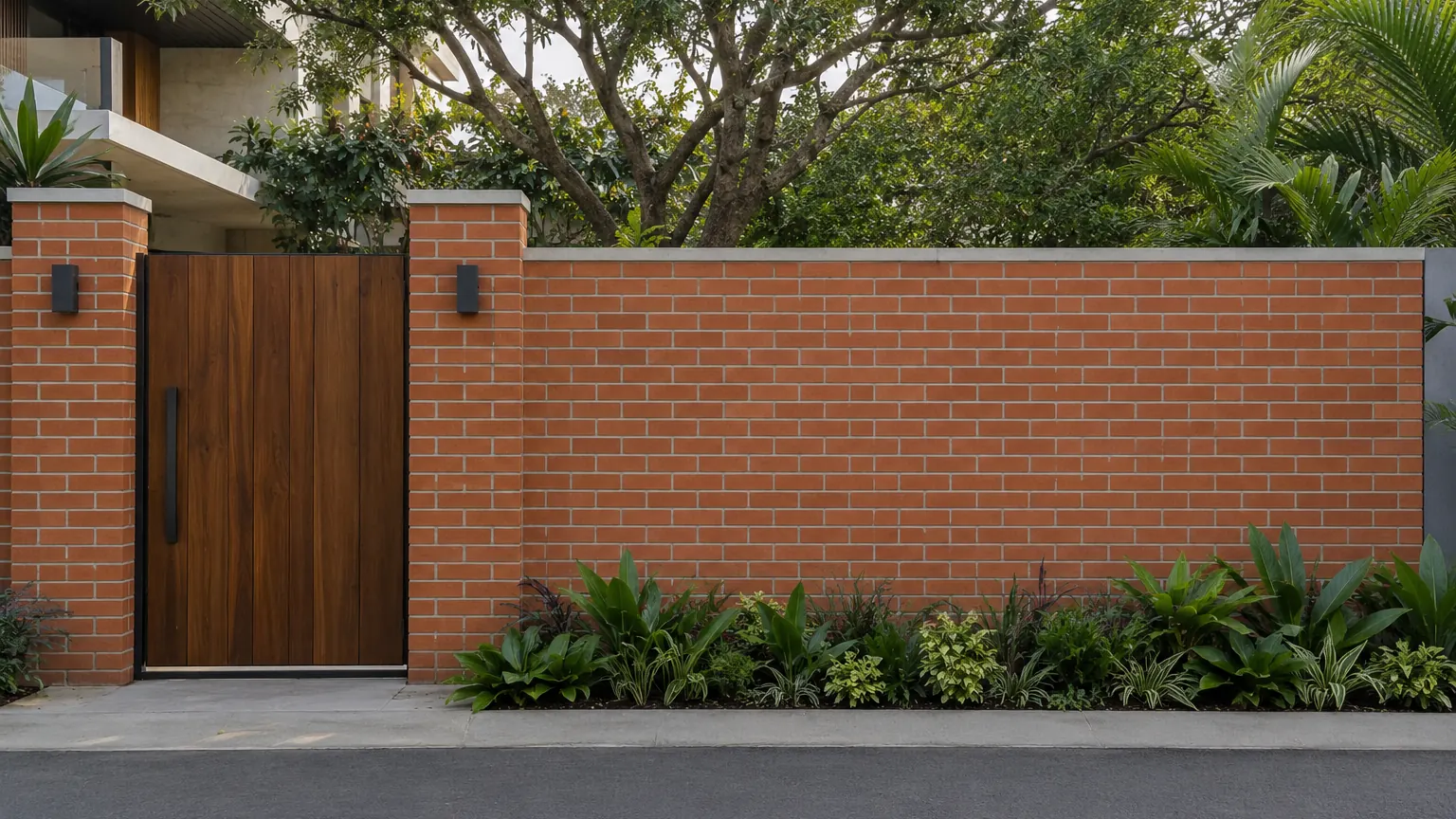
A photocatalytic coating uses titanium dioxide, a mineral that reacts with daylight. When light falls on the coated wall, the surface breaks down organic matter that lands on it: soot, oily pollution, and the beginnings of algae and mould. Rain then rinses the broken-down residue away.
The coating is clear once dry, so the wall keeps its original colour and finish. Because the effect comes from daylight and rain rather than additives mixed into a paint film, it does not rely on a chemical that slowly washes out.
Daylight is the trigger, so the effect is strongest on walls that get regular light. Deeply shaded corners still benefit from the drainage details above.
Before you coat
Existing growth has to be cleaned off first. A self-cleaning coating keeps a clean wall clean, so the starting point matters. The wall should be cleaned, left to dry fully, and checked for any damp problems behind the surface that need fixing.
Black fungus FAQs
Frequently asked