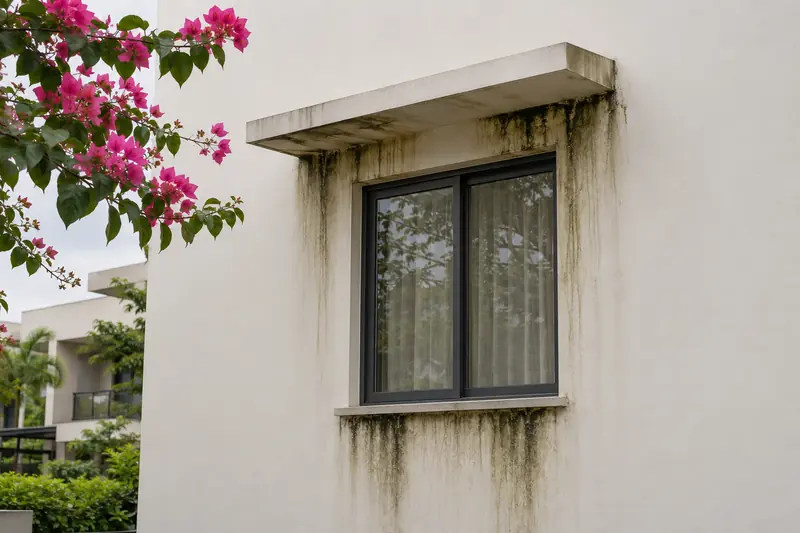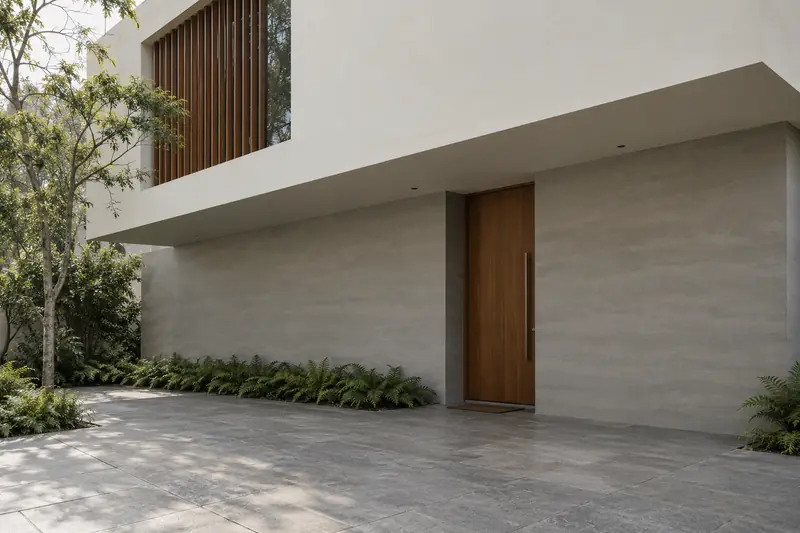
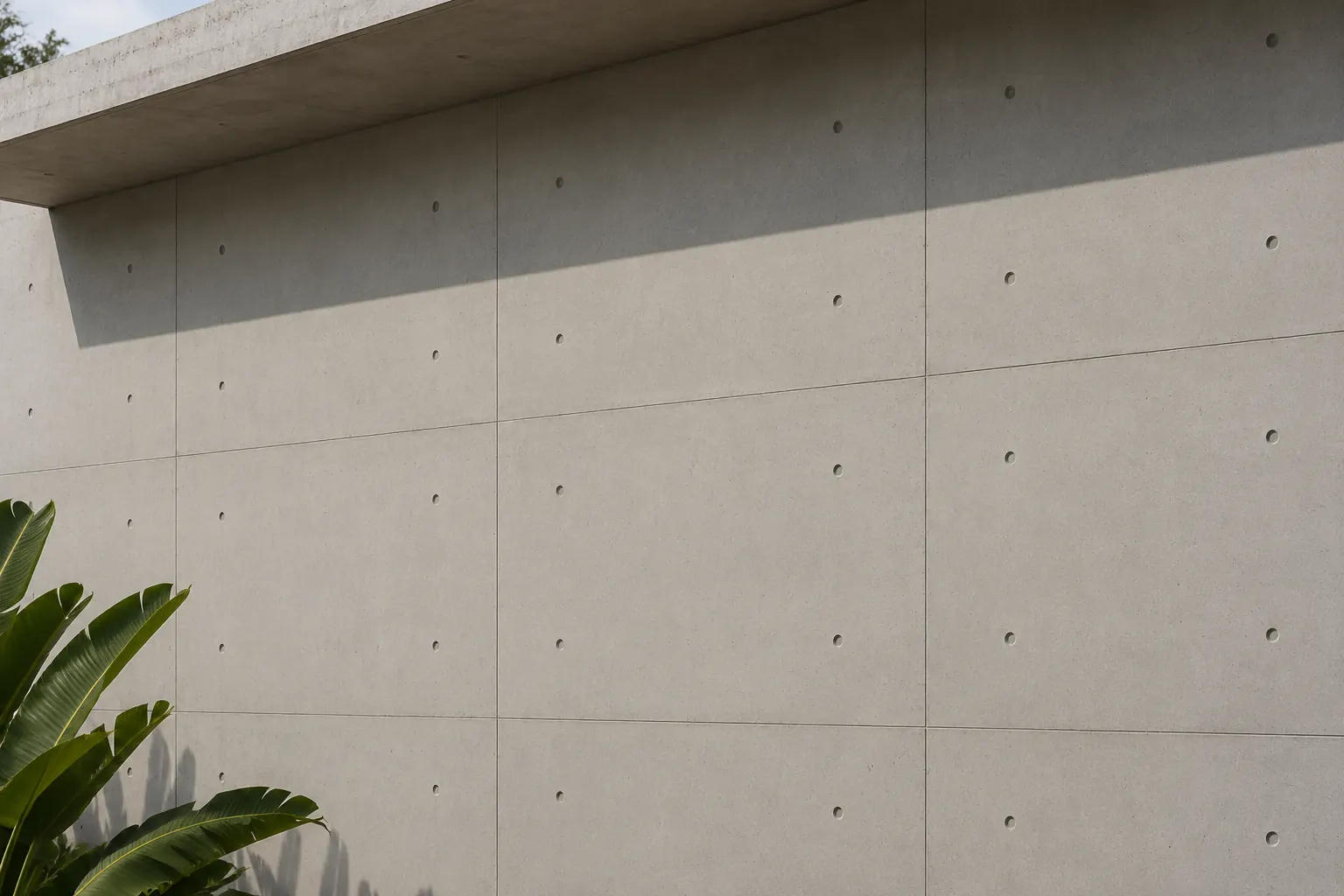
An exposed concrete finish leaves the structure of a building on show. There is no plaster, no cladding and no paint film, just the concrete as it came out of the formwork. Architects choose it for its honesty: the grain of the shuttering boards, the lines between pours and the weight of the material all stay visible.
The trouble starts after the formwork comes off. Concrete is rarely as even as the drawings imagined, and a few monsoons later it often looks tired. This guide covers what an exposed concrete finish is, why it changes over time, and the ways to keep the look without losing the material.
What counts as an exposed concrete finish
The term covers any concrete surface left visible as the final finish. On Indian projects you will mostly see three kinds.
Each one ages differently, but they share one quality. The finish is the concrete itself, so anything that marks the concrete marks the facade.
Why exposed concrete rarely matches the drawings
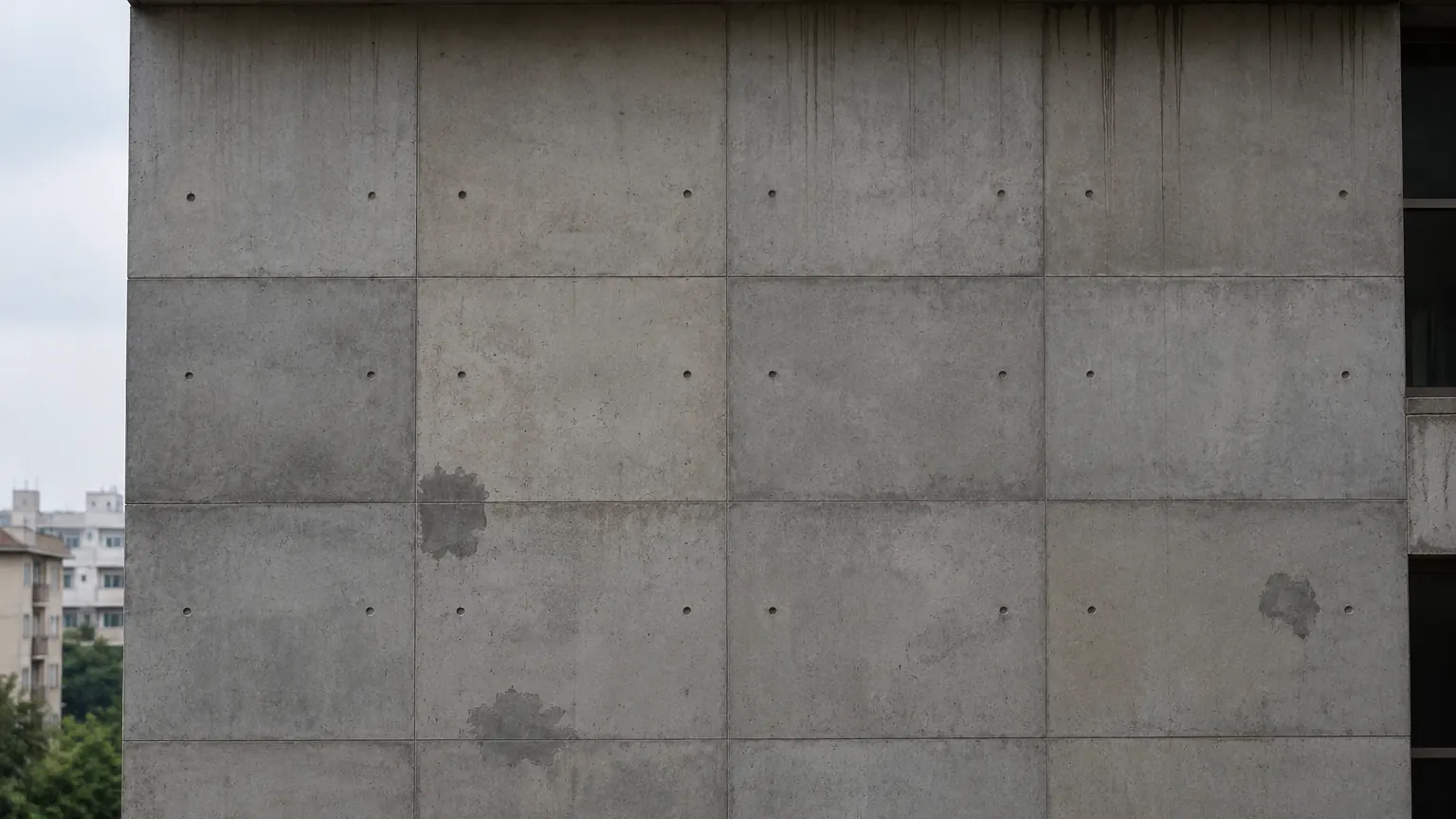
Concrete is mixed and poured in batches, and each batch can come out slightly lighter or darker than the last. Cement source, water content, curing time and even the weather on pour day all shift the colour. On a large elevation, those differences show up as visible bands.
Then come the repairs. Honeycombing, tie holes and chipped edges get patched with fresh mortar, which almost never dries to the same shade as the wall around it. A clean facade can end up with a dozen pale squares on it.
Weather adds the rest. Bare concrete is porous. In the monsoon it soaks up rainwater, and dark streaks form below sills, parapets and chajja edges where water runs off. In damp, shaded corners algae can take hold. None of this damages the structure, but it changes the look the architect specified.
Three ways to deal with it
Leave it bare. This is the most honest option, and some projects accept the patina as part of the design. The catch is that you cannot control how it ages, and patch repairs stay visible for the life of the building.
Cover it. Paint or a textured coating evens out the colour, but it also hides the concrete. Some texture paints are designed to imitate an exposed concrete look on plastered walls. That can suit a budget, but on real concrete it means hiding the genuine material and replacing it with a picture of itself.
Colour it. A penetrating stain soaks into the concrete instead of sitting on top of it. The surface keeps its texture, board marks and pores. Only the colour changes, and it can be as light or as strong as the design needs.
For architects who chose exposed concrete because of what the material is, the third option is usually the one that keeps the original idea intact.
How a penetrating stain colours concrete
A film-forming paint creates a separate layer on the wall. A penetrating stain works differently: it penetrates the pores and bonds with the concrete, so there is no skin on top that can peel or blister later.
Because it does not seal the surface, the wall still breathes. Moisture inside the concrete can escape as vapour, which matters in a climate that swings between monsoon damp and dry heat.
The strength of the colour is adjustable. A light wash evens out pour lines and patch repairs while leaving the natural variation of the concrete. More applications build up towards a fuller, more uniform tone. The same product can give a facade a barely-there tint or a deliberate colour.
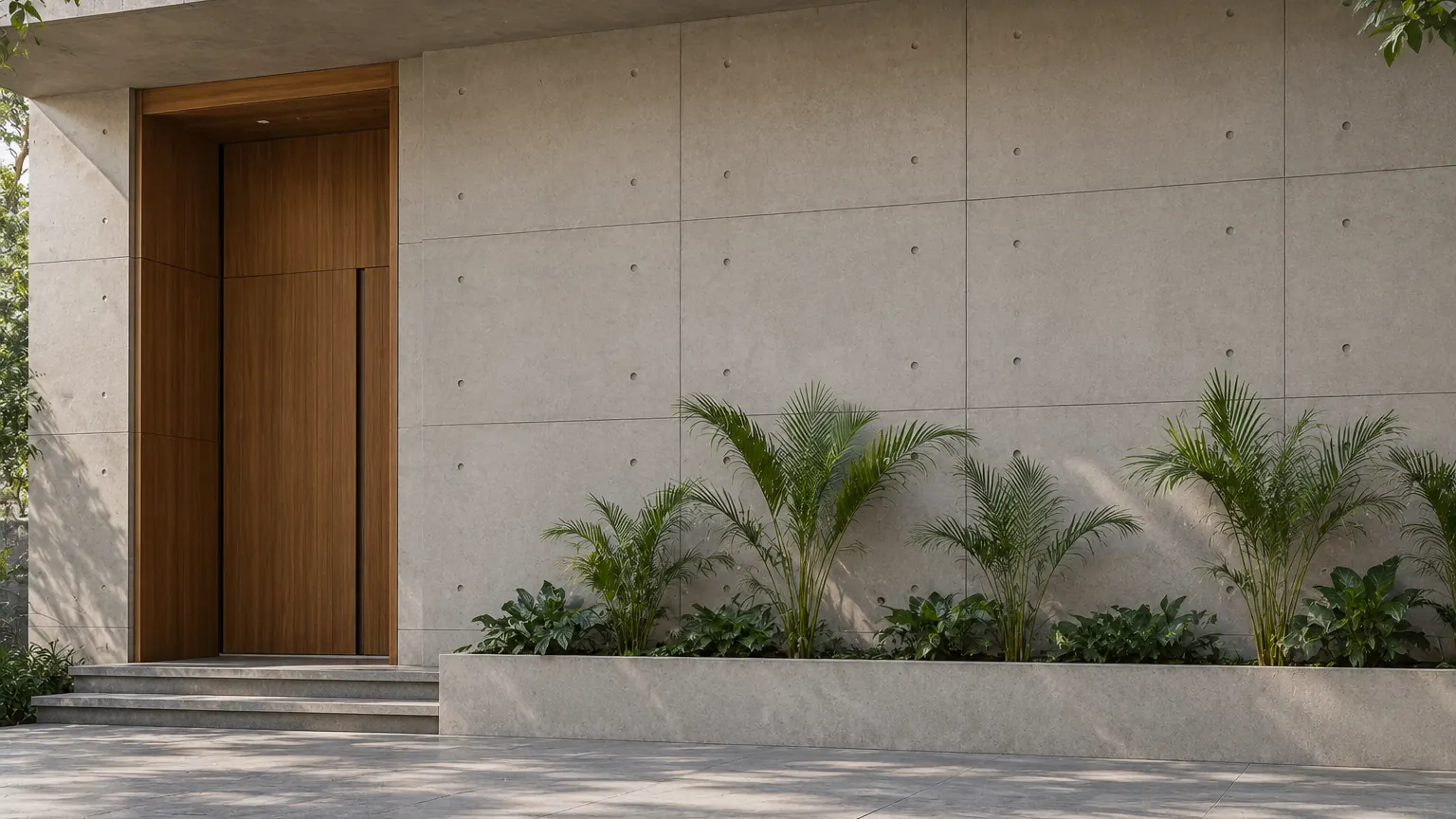
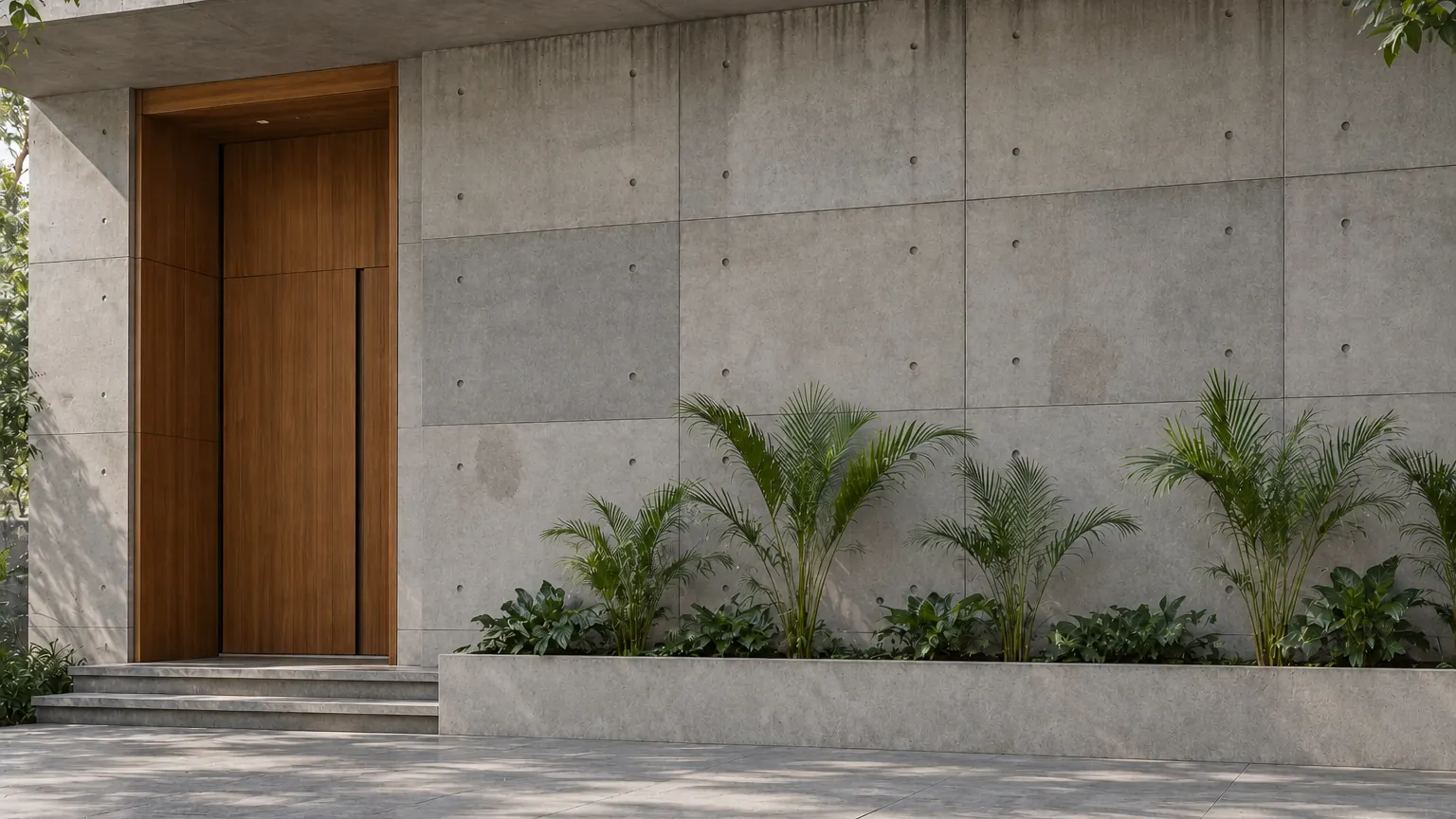
Planning an exposed concrete facade
A few decisions early in the project make the finish far easier to get right.
Plan for the stain before the pour. Knowing that the concrete will be coloured later takes pressure off the pour itself. Small batch differences and repairs can be blended afterwards.
Keep repairs cement-based. Patches made with Portland cement mortar take a penetrating stain the same way the wall does. Epoxy or polyurethane fillers do not, and they will show through.
Test the surface with water. Mist the wall lightly. If it darkens evenly and quickly, it is ready. If water beads up in places, there is form-release oil or residue that needs cleaning off first.
Approve a sample panel on site. Colour on a swatch and colour on your actual concrete are never quite the same. A sample area on the building, seen in real daylight, is the reference for the whole facade.
Keep it for bare surfaces. A penetrating stain needs open, unsealed concrete or masonry to soak into. It is not meant for walls that already carry paint or a sealer.
Exposed concrete FAQs
Frequently asked